

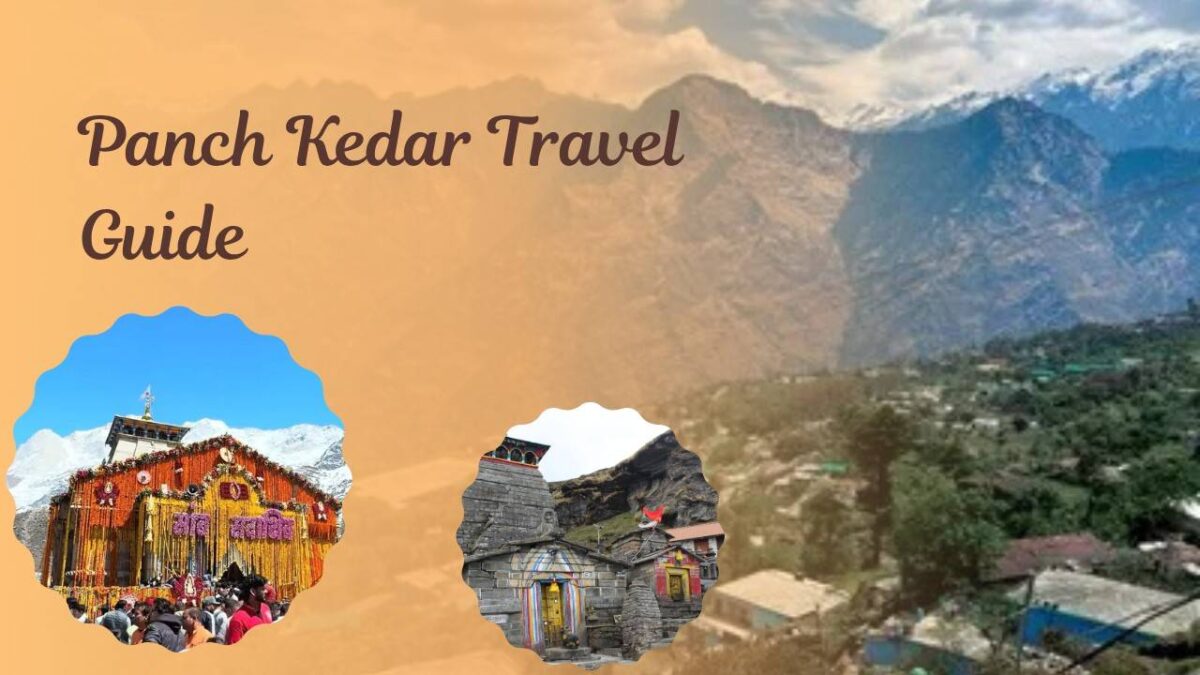
Panch Kedar is a revered pilgrimage in the Garhwal Himalayas of Uttarakhand. The term Panch Kedar refer to the five holy shrines of Lord Shiva which ties to ancient spiritual mythology.
Located in the different parts of the state these temples involve pilgrimage with a raw Himalayan adventure.
Panch Kedar temple names are Kedarnath, Tungnath, Madhyamaheshwar, Rudranath and Kalpeshwar; surrounded by snow capped peaks and required trekking to reach the shrine.
According to the legends, these are the places where the different parts of Lord Shiva Body appeared when he took the form of Bull (Nandi).
Now, these sites are becoming very popular among pilgrims and trekkers who have a craze for an active pilgrimage journey through the scenic Himalayas which is physically challenging yet spiritually rewarding.
Temples like Kedarnath is the world’s most popular hindu pilgrimage and attracts millions of devotees across the world.
Travelers often choose Kedarnath Tour Package for a hassle free experience because the logistics such as hotel booking, challenging trek and mandatory registration system can make this journey overwhelming.
The Panch Kedar yatra is also becoming popular day by day. Trekkers and pilgrims undertake this journey to seek the divine blessings and experience the true beauty of Himalayas.
The journey required a hybrid travel flow including road trip and independent trek, requiring 10-12 days to cover.
Here is a complete guide to Panch Kedar Yatra covering its mythological origin, travel route, and tips for a safe journey. So let’s start.
Origin of Panch Kedar
The origin of the Panch Kedar temple tied to Hindu legends and links to the epic Mahabharata.
According to Hindu legends, Lord Shiva took the form of a Bull (Nandi) to evade the Pandavas, who were seeking forgiveness for the sins of killing their kinsmen.
Shiva hid in the Himalayas; the Pandavas tracked him and worshipped him. Then, Bhima recognised Shiva as a bull and tried to catch it.
But the bull dived underground and appeared at five different places. Shiva forgave the Pandavas by pleasing their devotion and instructed that these places are worshipped for eternity.
Then, the Pandavas built the original Panch Kedar Temples, which were lately revived by sage Adi Shankaracharya.
Shiva forgave Pandavas by pleasing their devotion. Each one represents the different parts of his divine manifestation.
Panch Kedar Temples Name & its divine Representation
- Kedarnath: Represents the hump of the bull
- Tungnath: Symbolises the bull’s arms
- Madhyamaheshwar: Represents the navel (Stomach)
- Rudranath: Represents the Mukha (face) of the bull
- Kalpeshwar: Represents the hair (jata)
About Panch Kedar Temples
Kedarnath: First Kedar & sacred Jyotirlinga
Kedarnath was the first place where Lord Shiva appeared as a divine cosmic energy.
The temple is located in the Rudraprayag district of Uttarakhand at an altitude of 11755 feet (3,583 meters) above sea level.
Kedarnath holds immense spiritual significance as one of the twelve Jyotirlingas and Char Dham Yatra.
- Location: Rudraprayag District, Uttarakhand
- Altitude: 3,583 meters
- Highlights: views of Himalayan valleys and peaks
- Accessibility: drive via Guptkashi and trek from Gaurikund
- Trek Distance: 16 km one way
- Trek Starting Point: Gaurikund
Tungnath: Highest Shiva temple in the world
Situated at an elevation of 3680 meters, Tungnath is the highest and a very popular Shiva temple.
Known as a place where the Arms of Shiva appeared and are worshipped. Reachable via a short trek from Chopta, travellers visit here by choosing a Tungnath trip package for a more organised experience of a sacred journey.
- Location: Rudraprayag District, Uttarakhand
- Altitude: 3,680 meters (12073 feet)
- Highlights: views of meadow and mountain peaks
- Accessibility: drive via Ukhimath & short trek via Chopta
- Trek Distance: 3.5 km one way
- Trek Starting Point: Chopta
- Terrain: short, easy and well marked
Madhyamaheshwar
Located in the Rudraprayag district of Uttarakhand, Madhyamaheshwar is the third Kedar temple, renowned as the place where the navel (stomach) of the bull appeared.
Situated at a height of 3289 meters, the temple is surrounded by dense oak forest and peaks.
- Location: Ransi Village, Rudraprayag, Uttarakhand
- Altitude: 3,289 meters
- Highlights: pristine environment & surrounded scenary
- Accessibility: By drive via Ukhimath
- Trek Distance: 18-19 km one way
- Trek Starting Point: Ransi Village
- Terrain: moderately challenging due to walking through thick forest but manageable.
Rudranath: Most arduous trek among Panch Kedar
It’s a natural rock temple that sits against the backdrop of alpine meadows of Chamoli, Uttarakhand. Rudranath is the place where Lord Shiva’s face appeared and is worshipped.
Accessible by a 21-22 km strenuous trek, Rudranath temple is widely renowned as the most difficult trek among the Panch Kedar trek pilgrimage.
- Location: Chamoli district, Uttarakhand
- Altitude: 11,800 feet (3600 meters)
- Highlights: massive views of Mt. Nanda Ghunti & lush bugyals
- Accessibility: Drive via Gopeshwar town & then trek to the temple
- Trek Distance: 20-22 km
- Trek Starting Point: Sagar village
- Terrain: toughest among Panch Kedar due to steep ridge climbs
Kalpeshwar: Fifth final Kedar temple
The fifth and final shrine of Panch Kedar circuits represents the matted hair (jata) of Shiva.
Situated at an altitude of 2200 meters in the Chamoli district, it is the only temple that is open all year. Offering a less commercialised and peaceful retreat.
- Location: Urgam Valley, Chamoli district, Uttarakhand
- Altitude: 2200 meters
- Highlights: peaceful and scenic surroundings & sacred Kalpavriksh tree
- Accessibility: Road travel to Helang & Urgam Village, then a very short trek to reach the temple
- Trek Distance: 1-2 km
- Trek Starting Point: Urgam Village
- Terrain: Gentle trail and low altitude
Panch Kedar Route & Travel Flow
The Panch Kedar Route is a hybrid route that involves over 500 meters of road travel and independent treks across the Rudraprayag and Chamoli districts of Uttarakhand.
It spans over 10-12 days, starting from Haridwar/Rishikesh and then following a traditional sequence.
Most Recommended Route:
Haridwar – Rishikesh – Gaurikund – Kedarnath – Chopta – Tungnath – Ransi Village – Madhmaheshwar – Sagar Village – Rudranath Temple – Urgam Village – Kalpeshwar Temple.
Suggested Itinerary/Travel Flow for Panch Kedar yatra
Rishikesh to Kedarnath (3-4 days)
Drive around 240 km up to Gaurikund, then start a trek to Shri Kedarnath temple.
Kedarnath to Tungnath (2-3 days)
Trek back to Gaurikund, drive down to Guptkashi and then drive to Chopta, where the Tungnath Temple trek starts.
Tungnath to Madhyamaheshwar (2 days)
Trek back to Chopta and drive 50 km to Ransi Village, where the Madhyamaheshwar trek starts.
Madhyamaheshwar to Rudranath (2-3 days)
Trek down to Ransi Village, drive 40 km to Sagar village. From there, start your trek towards Rudranath temple.
Rudranath to Kalpeshwar
Trek down to Sagar village, then drive to Urgam Village, requiring 60 km drive. From there, start a trek to Kalpeshwar.
Kalpeshwar to Rishikesh Return
Start your trek towards Kalpeshwar Mahadev Mandir. After Darshan, drive back to Rishikesh, around 250 km.
Travel Modes, Permit, & Logistics
For a Panch Kedar yatra traveler or trekkers can hire a private cab for a complete road journey or travel via government bus to the temple base points.
Alternatively, for safety and convenience, booking a travel package is a reliable option.
Now, if we talk about permits, registration is mandatory only for the Kedarnath temple, while the other Kedar temples are required to obtain a forest entry permit at the designated forest checkpoints.
Travel Tips For Visiting Panch Kedar
- Best Time to visit: Panch Kedar is a seasonal pilgrimage; temples are open from May to October. Visit during these opening months and avoid monsoon due to heavy rainfall.
- Weather Consideration: Check live weather forecast and road conditions before travel.
- Physical preparation: The journey requires climbing strenuous treks, so prepare your body in advance via muscle and strength training.
- Add buffer days: Add one or two days as a buffer for weather delays
- Respect Environment: Be respectful in behaviour; follow temple etiquette.
Faqs
In which order should I visit Panch Kedar?
The traditional route to Panch Kedar pilgrimage starts from Rishikesh, leading to Kedarnath via Gaurikun, then Tungnath via Chopta, Madhmaheshwar via Ransi village, Rudranath via Sagar Village, and finally to Kalpeshwar via Urgam Village. Passing through the scenic Himalayan valleys, forests and meadows.
How many days does it take to visit Panch Kedar?
The journey to Panch Kedar spans over 12-13 days and involves over 500 kilometres of road trip and treks to the Rudraprayag and Chamoli districts of Uttarakhand.
How many temples are in Panch Kedar?
There are five temples in Panch Kedar, which are:
- Kedarnath
- Tungnath
- Madhyamaheshwar
- Rudranath
- Kalpeshwar
Each one represents a different part of Lord Shiva’s bull form.
How do I register for Panch Kedar?
Only Kedarnath temple requires mandatory yatra registration, while the other Kedar temples require a forest entry permit to trek in a fragile Himalayan region. The permit acts as registration, which is obtained via nearby forest checkpoints.
Can we do Panch Kedar in one trip?
Yes, visiting all panch Kedar Temples in a single trip can be possible which requires road journey from one to another valleys and their respective treks. It takes almost 10-12 days to complete.
Conclusion
In conclusion, the Panch Kedar is a very popular trekking pilgrimage that combines spirituality with trekking adventure, attracting both devotees and trekkers.
The journey tests travelers faith, endurance and leads them to the path of spiritual enlightenment, offering a divine and adventurous experience for visitors.
